7.17.2005

Colorful Critter

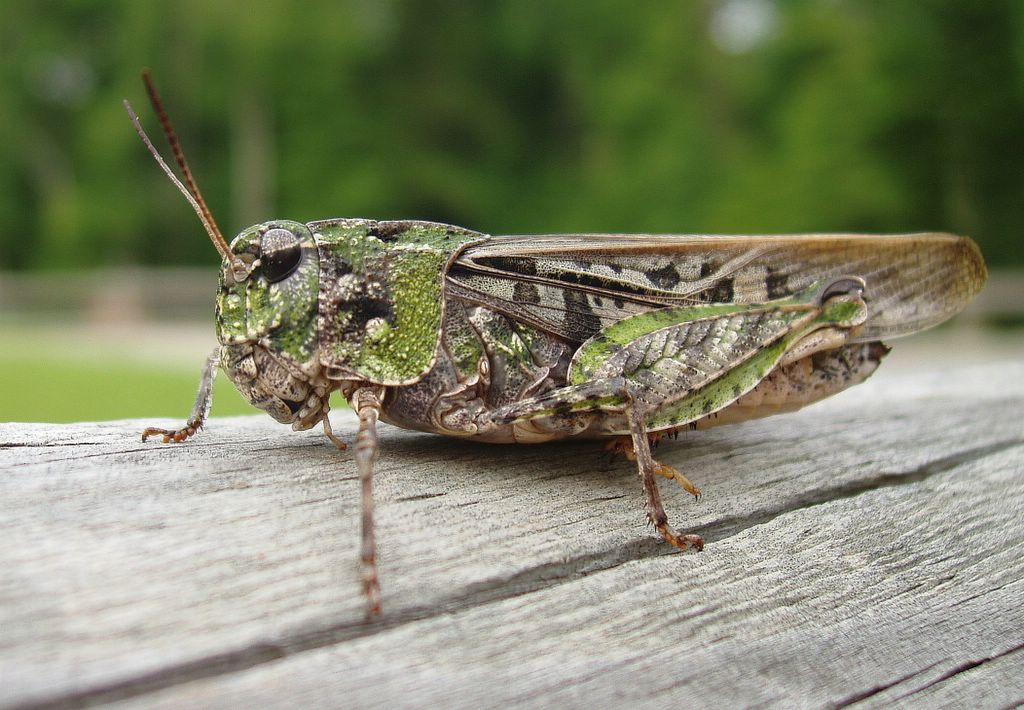
A bright flash of orange had us in chase and capture mode. The grasshopper had eluded us once before, but this time we were ready -- armed with a butterfly net!


Orange-winged Grasshopper, Pardalophora phoenicoptera

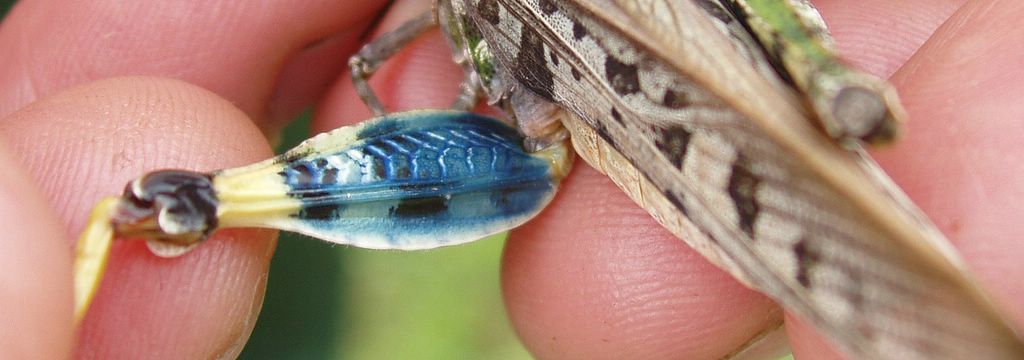
This grasshopper is beautiful in shades of green and gray, but it's hiding some colorful secrets.


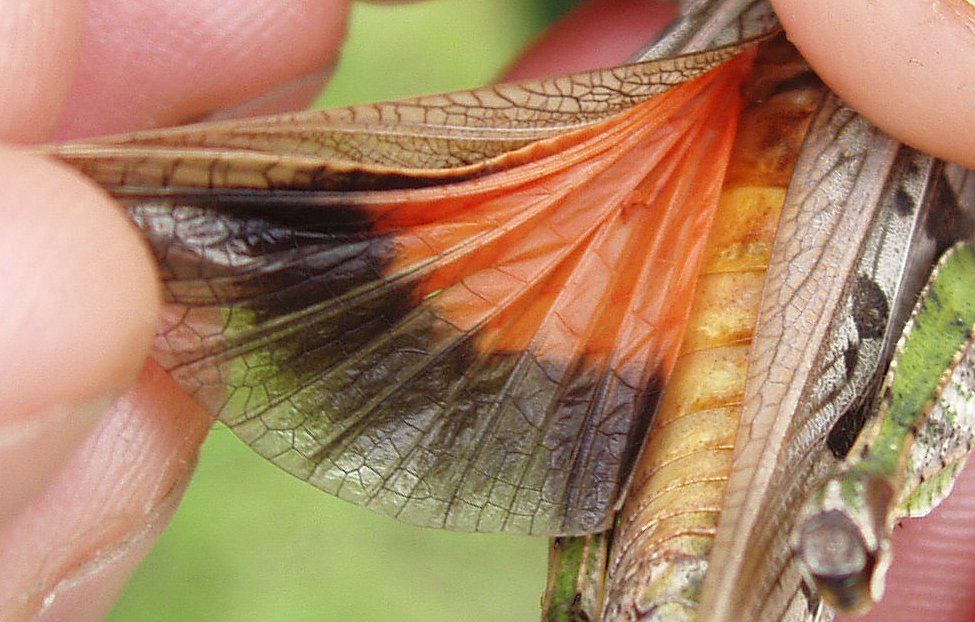
Bright orange underwings....


and bright blue inner thighs.

Many thanks to Mr. Swamp for holding the hopper and making it reveal its secrets! He has a gentle touch and the critter was released unharmed.

7.10.2005

Variation, Hyla Style

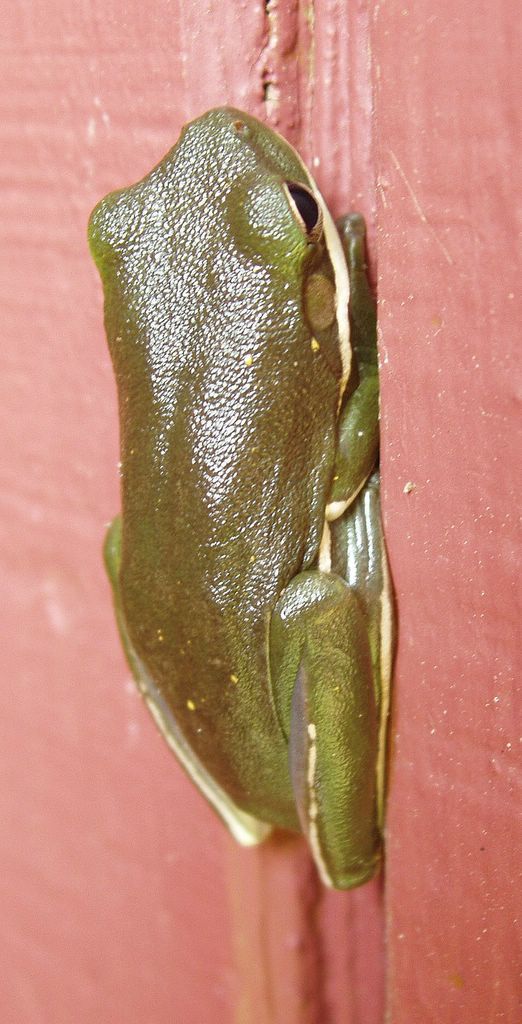
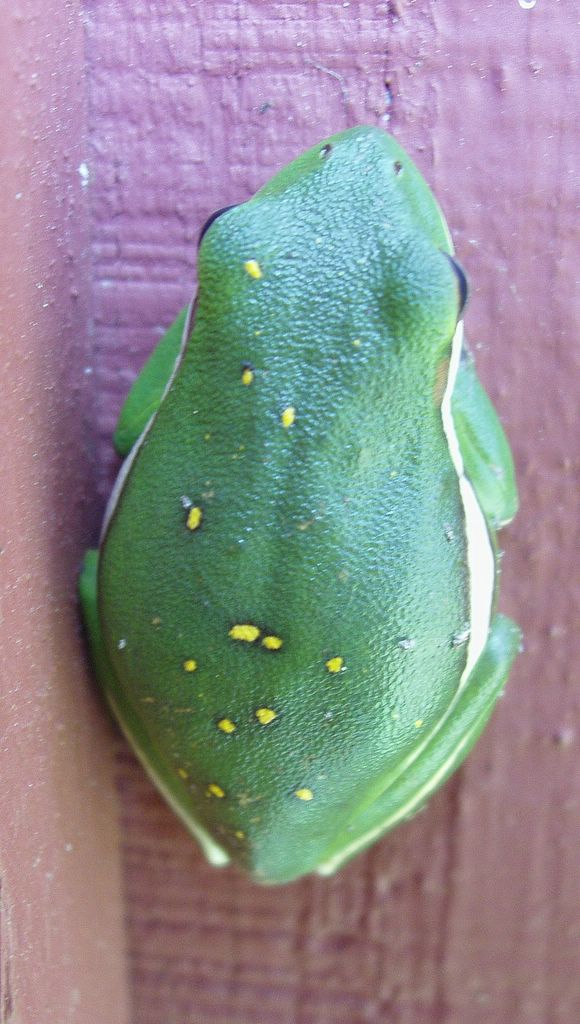
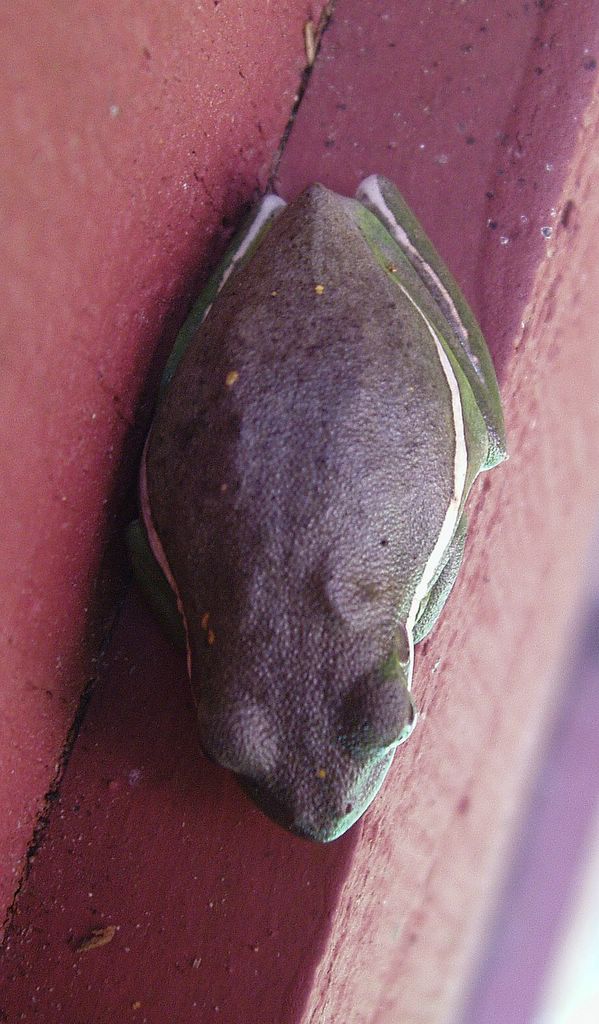
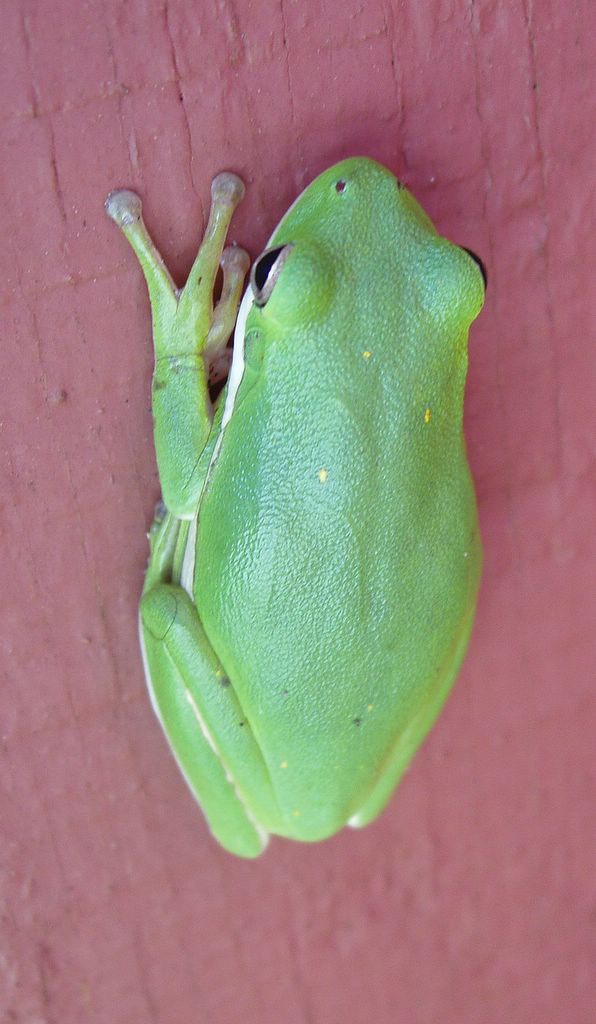
Behind the concession shed door, all within a couple of feet of each other, we found four little green treefrogs, Hyla cinerea. Each had its own interpretation of "green."


Variation One


Variation Two


Variation Three


Variation Four


Each was fat and sassy thanks to the fact that a light stays on all night in the shed. These frogs take advantage of the abundance of insects attracted to the light at night, then during the day they just chill in the shade behind the door.

7.08.2005

Today, In the Woods

Yellowflies are still out in droves, the ticks are plentiful, and the humidity is ridiculous -- must be the perfect day to check on the orchids we have been waiting to bloom!

It really wasn't so bad. There was so much to see we hardly even noticed the flies...yeah, right. :)


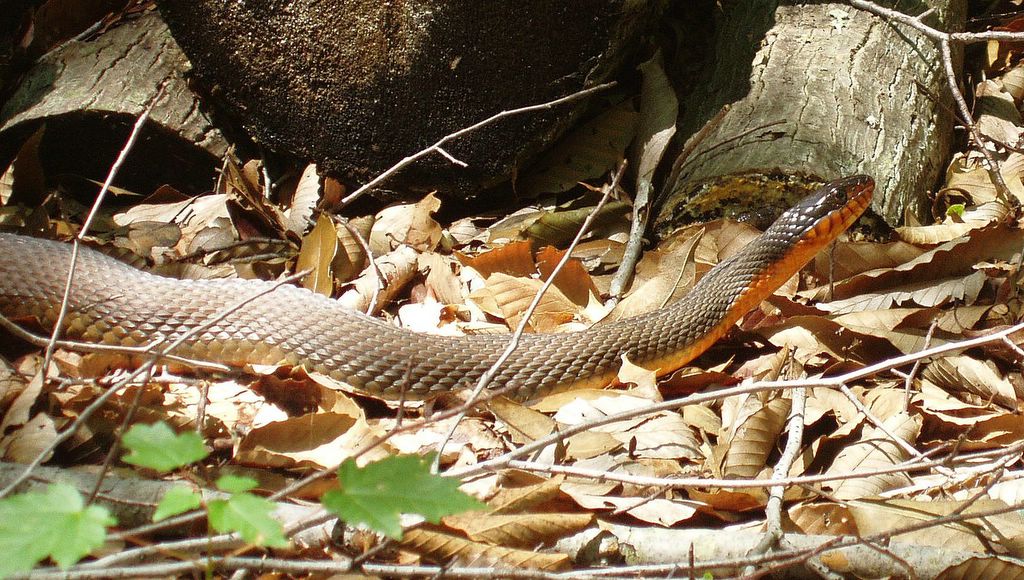
This red-bellied water snake (Nerodia erythrogaster erythrogaster) was a tad out of place. We saw him in the beech woods on the high side of the trail. Must have been looking for a tasty toad to munch.


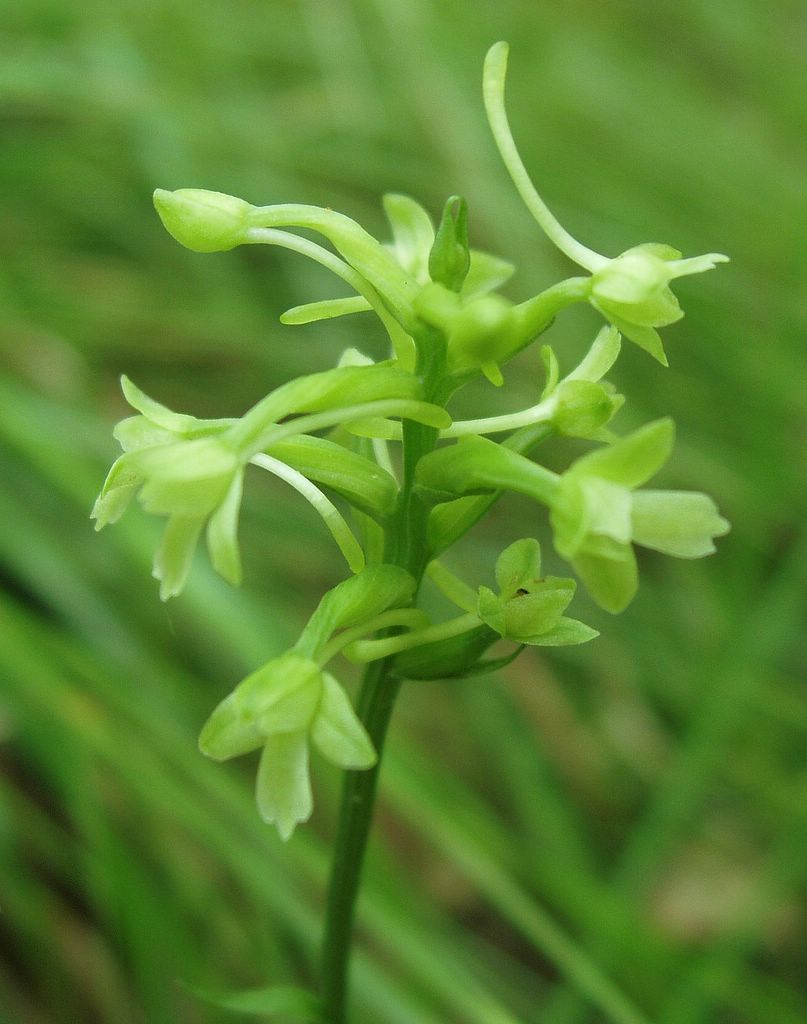
This is the flower that had us out and about today. It is the Small Green Woodland Orchid, Platanthera clavellata. We have been watching and waiting for it to bloom for well over a month now. We weren't sure of the species until we saw the flowers.


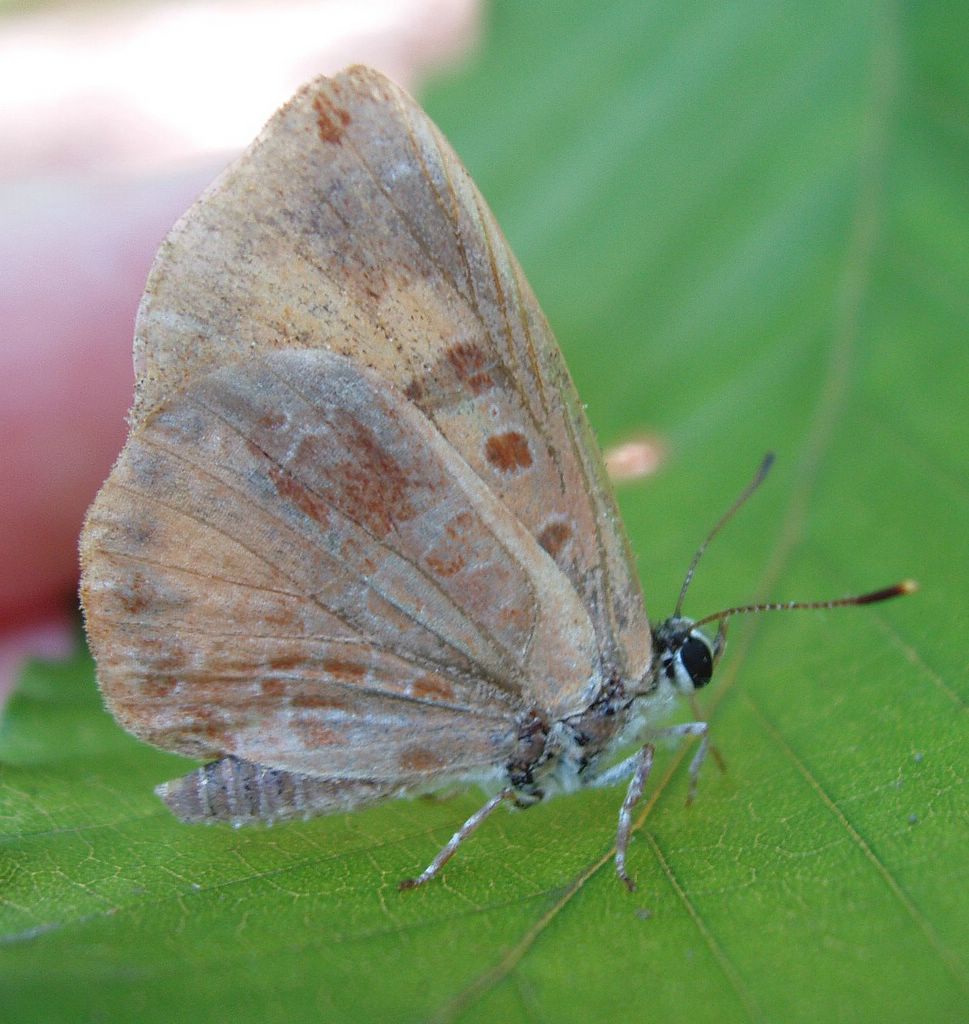
We were quite excited to find this butterfly today. While worn and weary-looking, it's special because it is a species we hadn't seen before, Feniseca tarquinius, common name Harvester. The caterpillars of this species feed on woolly aphids -- that's right, carnivorous caterpillars!


Don't know, don't wanna know. :)

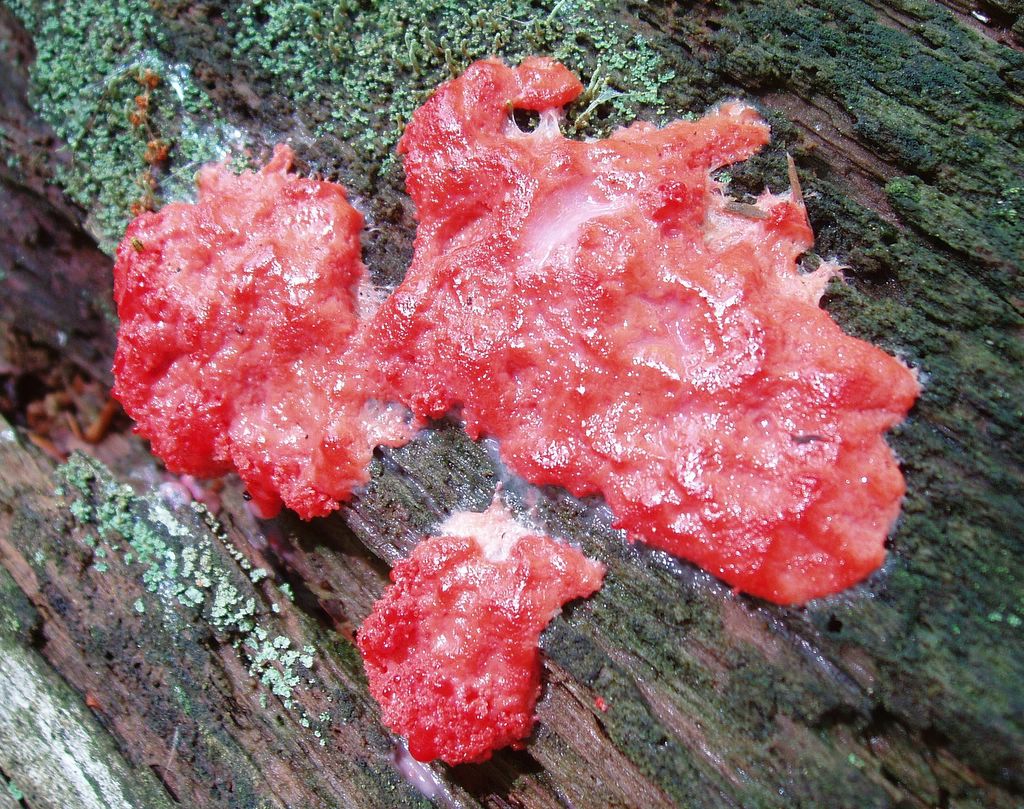
A splash of color in the woods caught my eye so I went off-trail to investigate (people can be so creative with their litter). What I found was this blob of...what? Fungus? Protist? Not too sure about this stuff.


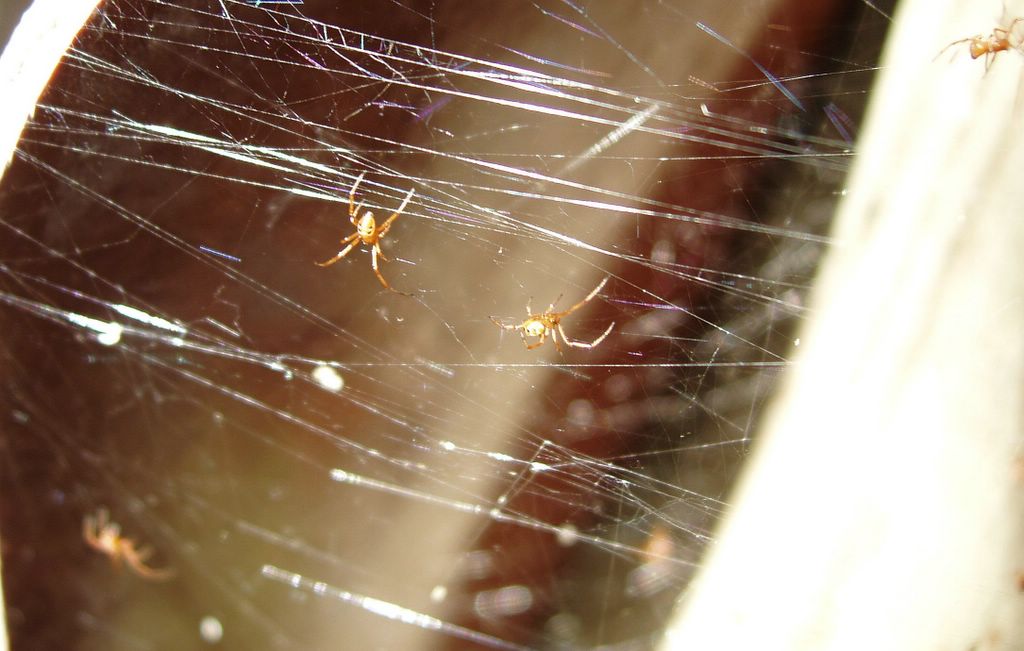
I had to open a locked gate on the fire road. A rather large family of black widows had set up house-keeping on the post -- these are a few of the babies. Mama widow was tucked away alongside a counter-sunk bolt. She was really pretty, but I couldn't get a picture of her.


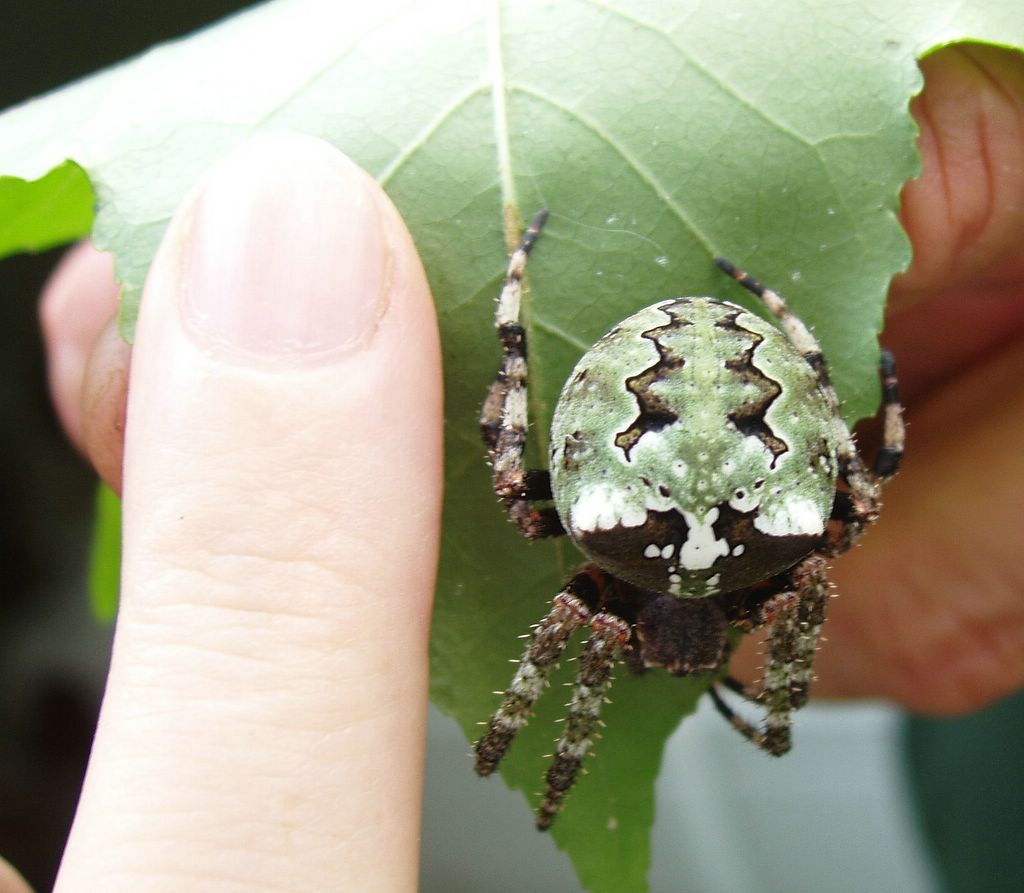
I did manage to get several pictures of this beauty, though. Too bad I couldn't get the shot of her running up my arm -- I couldn't believe how heavy she was. No clue as to what type of spider this is, but I'll keep looking.

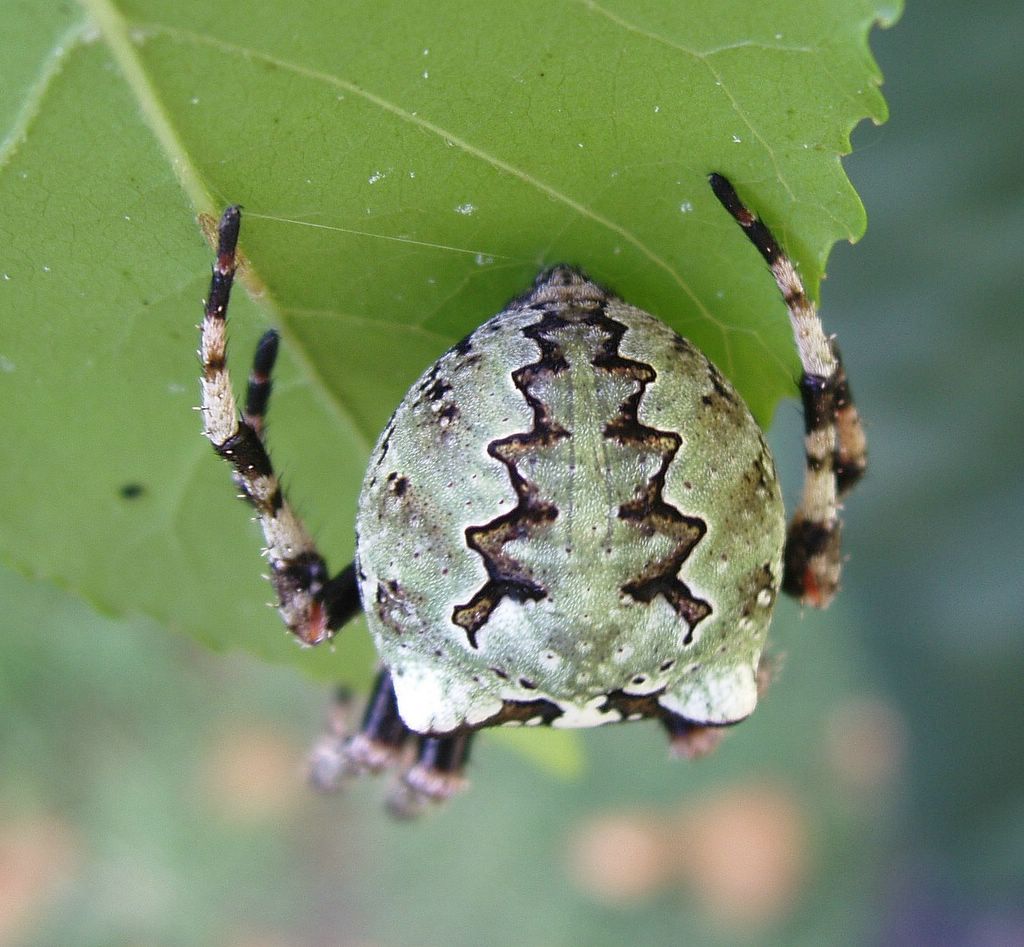
Meanwhile, take another look at her big, beautiful spider butt. Outstanding!


****************
Probable ID on the spider: Giant Lichen Orbweaver, Araneus bicentenarius

7.04.2005

Yesterday, On the Pond

Yesterday, we took advantage of the break in the heat and headed out on the pond for a little recreational paddling. It was beautiful and once we were out on the pond, away from the shore line, we weren't bothered by any biting flies or mosquitoes -- luxurious!


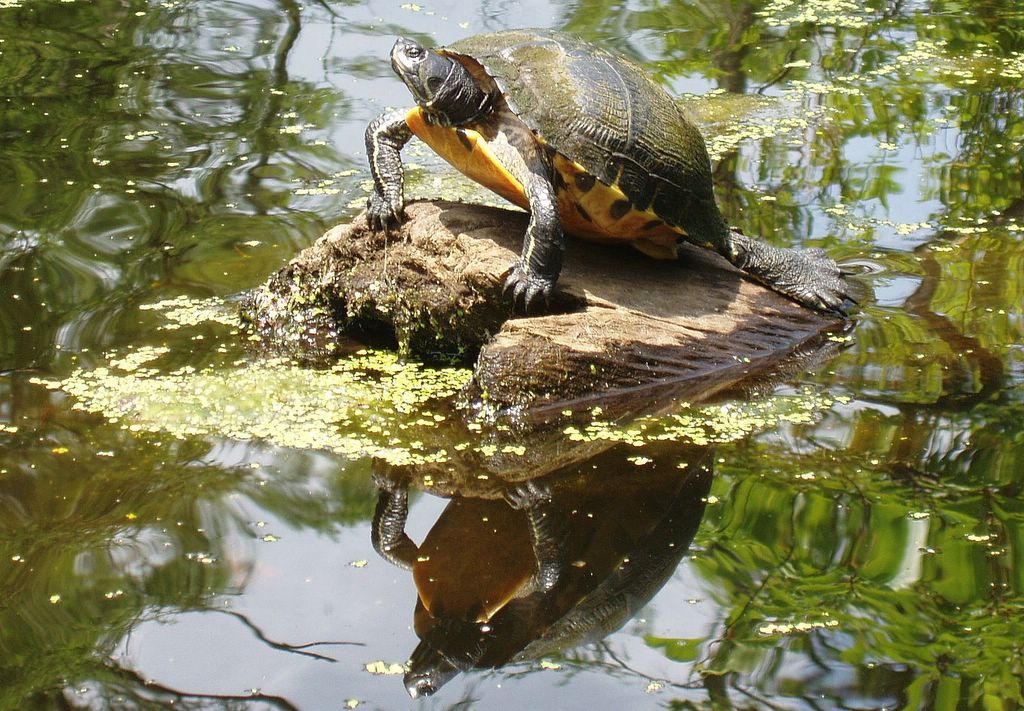
This female yellow-bellied slider, Chrysemys scripta, was quite tolerant of our approach. Normally the turtles are very shy and dive into the water long before we get close enough for a photo.

The size of the turtle, the relatively short length of the claws on the front feet, and the short tail shown in the photo below all indicate this turtle was female.

She was tolerant of our presence, but even she had her limits. At least she was kind enough to go off the opposite side of the log so I could get a shot of her yellow-striped britches!

Other turtle species observed yesterday: Eastern Musk, Eastern Mud, Eastern Painted, and assorted "Cooters."

As I have mentioned in previous posts, the millpond is dotted with the stumps of bald cypress trees that were logged years ago. Cypress stumps take a long time to decay so they provide wonderful little islands that are colonized by a variety of plants. It isn't unusual to find a dozen or more species of plants growing on any given stump.

This Eastern tiger swallowtail, Papilio glaucus, was nectaring on a button bush (Cephalanthis occidentalis) that is growing on such a stump out in the middle of the upper end of the pond.

Other butterflies seen yesterday: Spicebush swallowtail, Red-spotted purple, Red Admiral, Eastern tailed blue, and Pearl crescent.
Dragonfly sex is a complicated affair. If you have never studied up on it, I recommend that you do a little reading on the subject. I'm not even going to try to address the whole process here.

These Prince Baskettails (Epitheca princeps) were perched in a bush, trying to be discreet, but I intruded into their "private" time anyway. :)


This particular configuration is the wheel position. The male grasps the female by the head with his abdominal appendages while she sort of docks her reproductive organ with his "accessory genitalia" and sperm is transferred. Different species stay in this configuration for varying lengths of time -- some species even fly while in this position. The mere thought gives me a headache ;)

Our dragonfly list from yesterday: Great blue skimmer, Slaty skimmer, Eastern pond hawk, Blue dasher (a gazillion of these!), Harlequin darner, Swamp darner, Eastern amberwing, Halloween pennant, Carolina saddlebags, and Black saddlebags. We also saw a variety of damselflies, but didn't take the time to ID them.
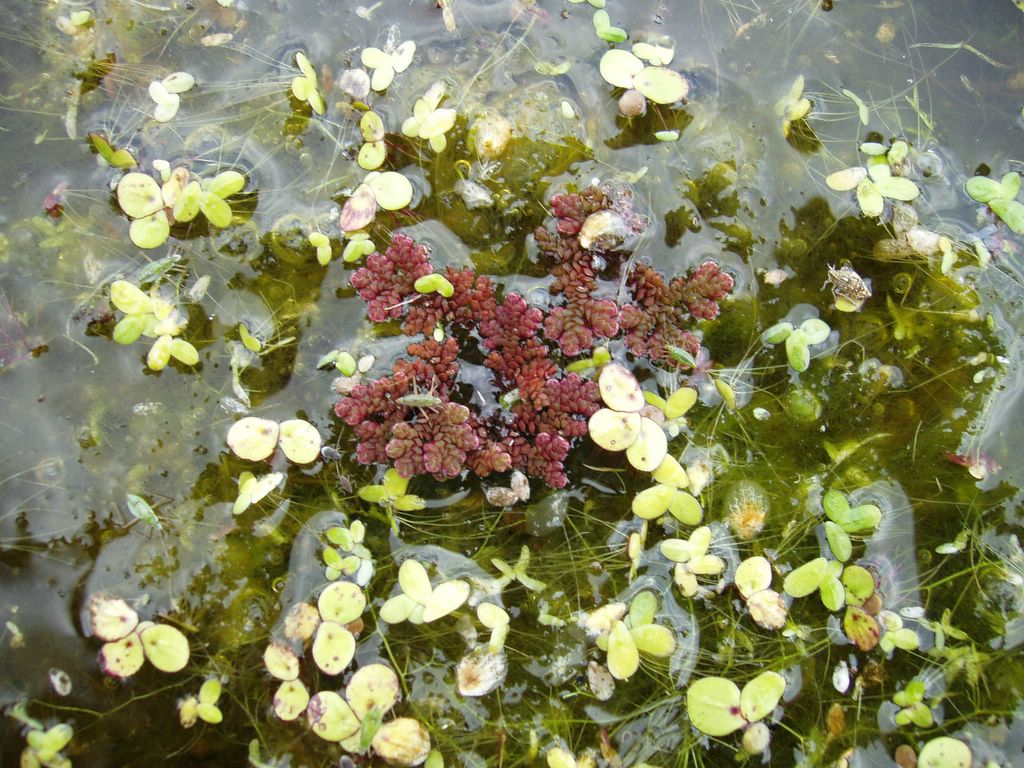
The little red plant in the middle of this pond glop is called mosquito fern, Azolla caroliniana. It is a true fern and the only aquatic one we have.

The other plants with the little leaves are various species of duckweed -- I'll have to devote a whole post to those one of these days. The barely submerged, darker green gunk is some type of algae.


Our hot, dry June has left us with more algae than we like to see this time of year. As it dies and begins to decay, the algae will take up a good bit of the dissolved oxygen in the water. What we need is a nice soaking rain that will cause the pond to rise and move some of the floating mats of algae out and areate the pond at the same time.
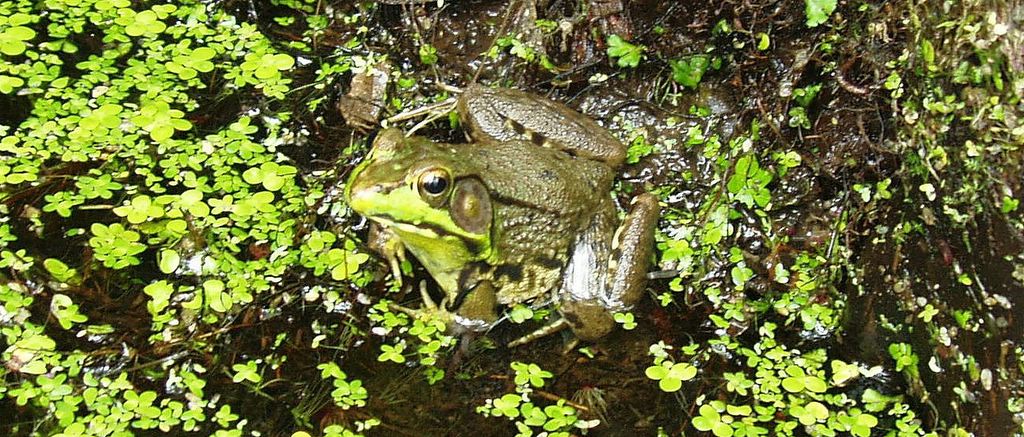
The green frogs, Rana clamitans, were quite talkative yesterday. They usually aren't too keen on being caught out in the open and tend to dive into the water with a warning squawk.


This male was quite cooperative, however. He sat still while my husband manuvered the canoe in as I leaned out over the bow. Had a log not been in the way I may have gotten close enough to this particular frog to have used my macro setting...as it was I had to settle for a "regular" shot.

Green frogs are highly variable. This one was sporting a festive green upper lip.

(The large tympanum, or ear, behind the eye of this frog tells us it is a male. We also saw it calling.)
As usual, there was no shortage of green treefrogs, Hyla cinerea, on the pond yesterday.

They ranged in size from this itty bitty, newly transformed one (about two thirds of an inch, or 1.5 cm)...


To this adult (about 2.5 inches, or 6.4 cm).


Other frogs we saw or heard: Bullfrogs, Carpenter frogs, Gray treefrogs, Squirrel treefrogs, Cricket frogs, and Southern leopard frogs.

GBH doing the Funky Chicken...well, not really.

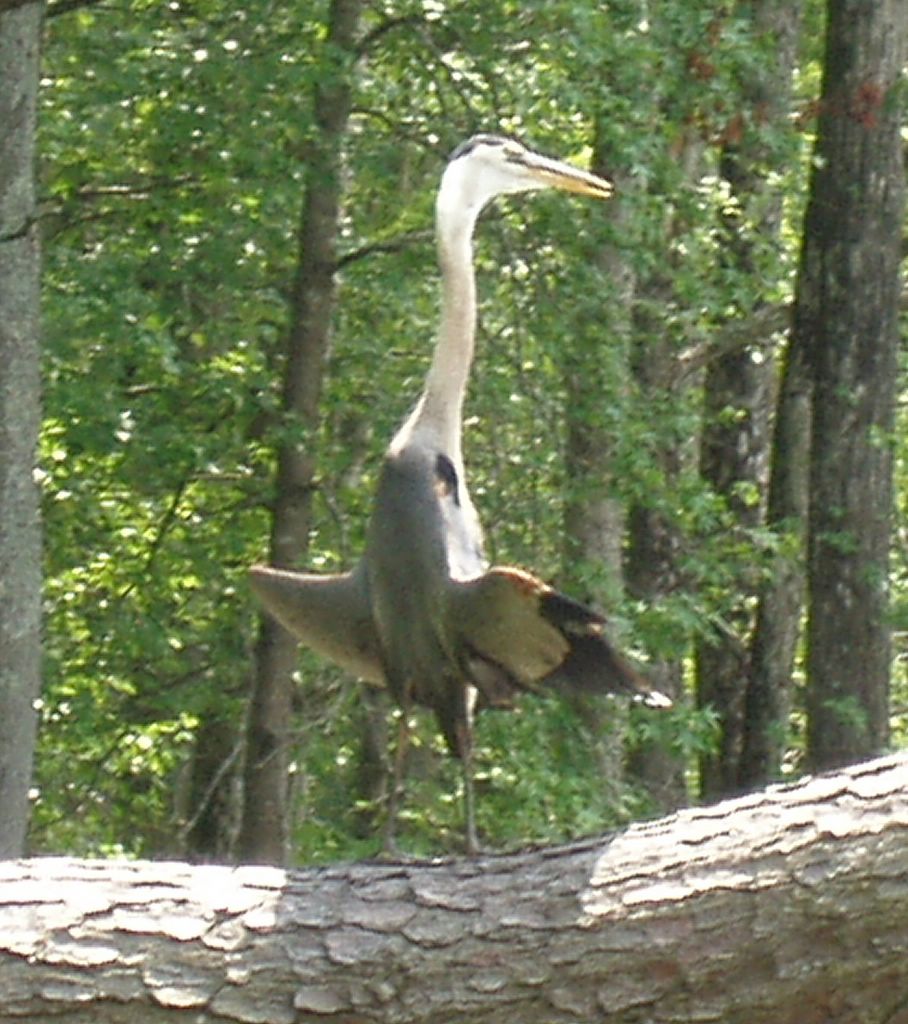
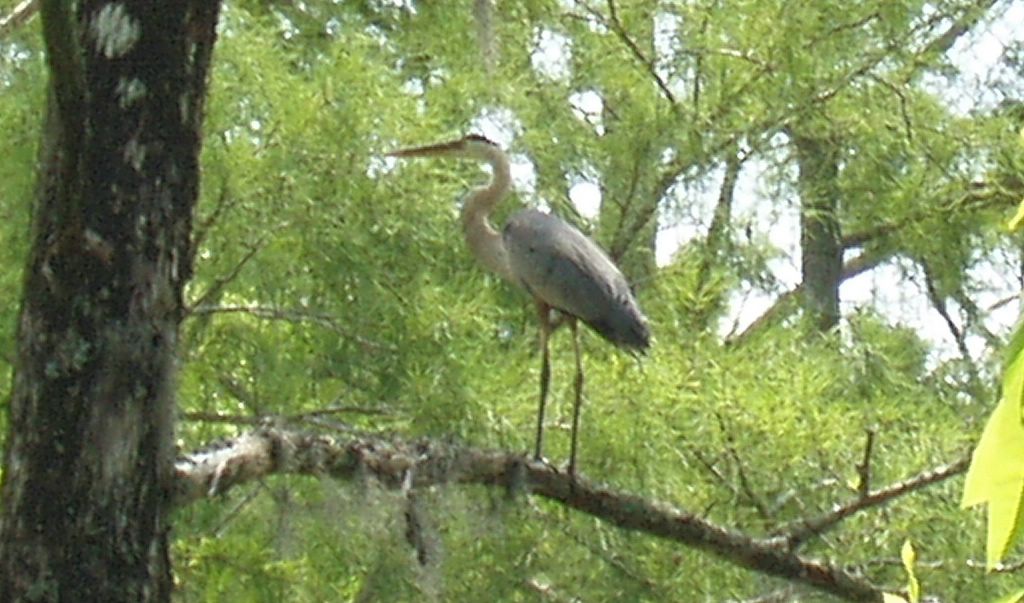
This juvenile great blue was sunning the underside of its wings. In order to keep from overheating while it soaked up the rays, this bird was doing a little gular fluttering (sort of vibrating its neck pouch) with its beak open. The whole process looked a little strange, but it helps to keep the bird healthy.

We had to laugh at this particular bird -- its voice hadn't changed yet so it had a sort of high pitched squawk.
Great blue herons never let me get close enough to take a picture without using my digital zoom. As a result, all of my heron pictures are grainy. Despite their nervous ways, they remain one of my all-time favorite birds.


It never ceases to amaze me when I watch these great, gangly birds maneuver through the trees and land on those long skinny legs. How can something be so elegant and yet so awkward at the same time?

For those of you interested in such things, here's our pond bird list from yesterday:
Green Heron, Great Egret
Osprey, Red-shouldered hawk, Barred owl
Fish crow, Turkey vulture, Black vulture, Blue jay
Wood duck, Belted kingfisher
Yellow-billed cuckoo, Common grackle, Red-winged blackbird
Prothonotary warbler, Yellow-throated warbler, Common Yellowthroat, Pine warbler, Parula, Hooded warbler
Mockingbird, Catbird
Carolina wren
Blue-gray gnatcatcher
Red-eyed vireo, Yellow-throated vireo
Eastern wood peewee, Acadian flycatcher, Great crested flycatcher, Eastern kingbird
Summer tanager
Chimney swift, Purple martin
Carolina chickadee, Tufted titmouse, White-breasted nuthatch
Ruby-throated hummingbird
Pileated woodpecker, Red-bellied woodpecker, Red-headed woodpecker, Downy woodpecker, Hairy woodpecker, Flicker
Cedar Waxwing
Orchard oriole
Chipping sparrow, Gold finch, Cardinal, Rufus-sided towhee
Wood thrush, Robin, Eastern bluebird
Mourning dove
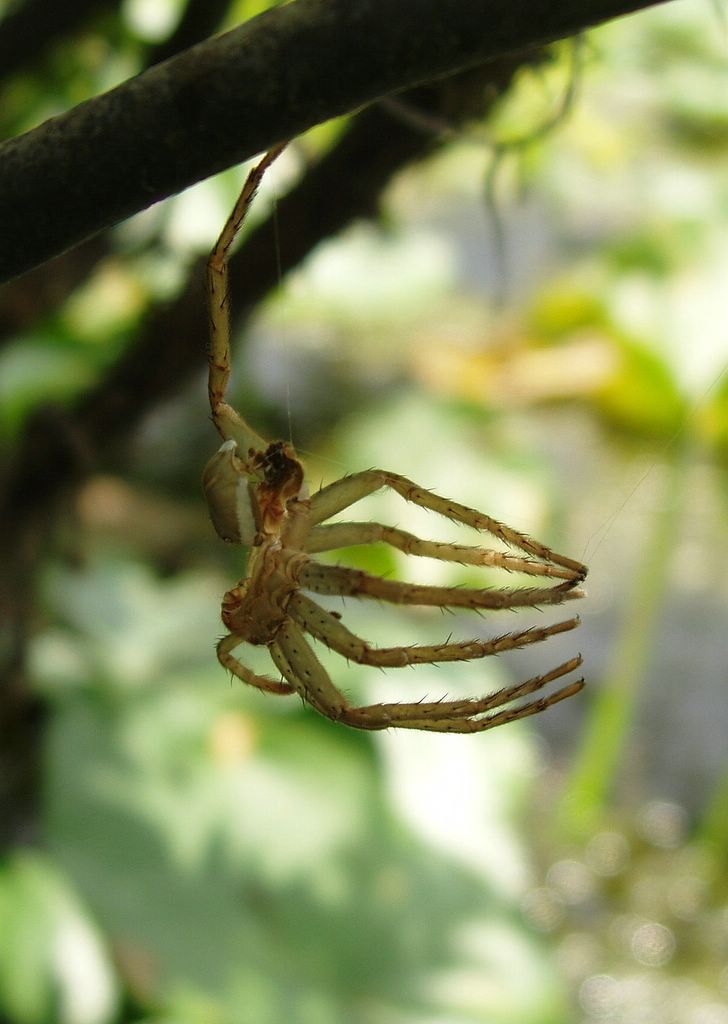
Shed exoskeleton of a fishing spider, Dolomedes triton

7.02.2005

A Few Flowers in Bloom


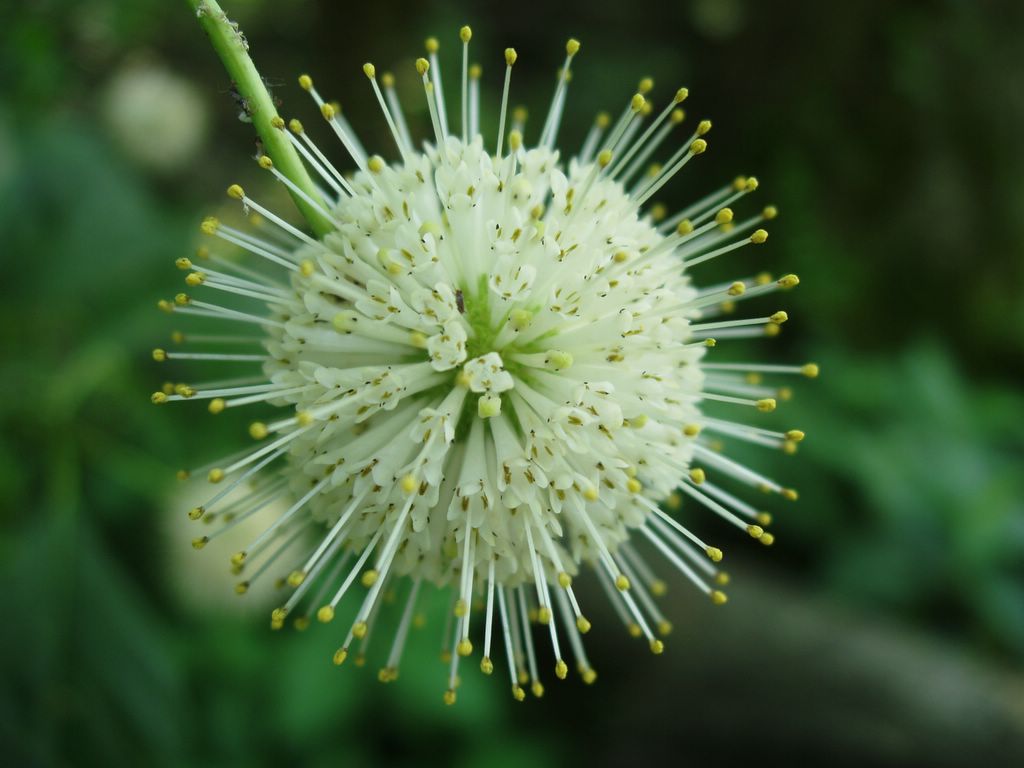
Button bush flower (Cephalathanus occidentalis)

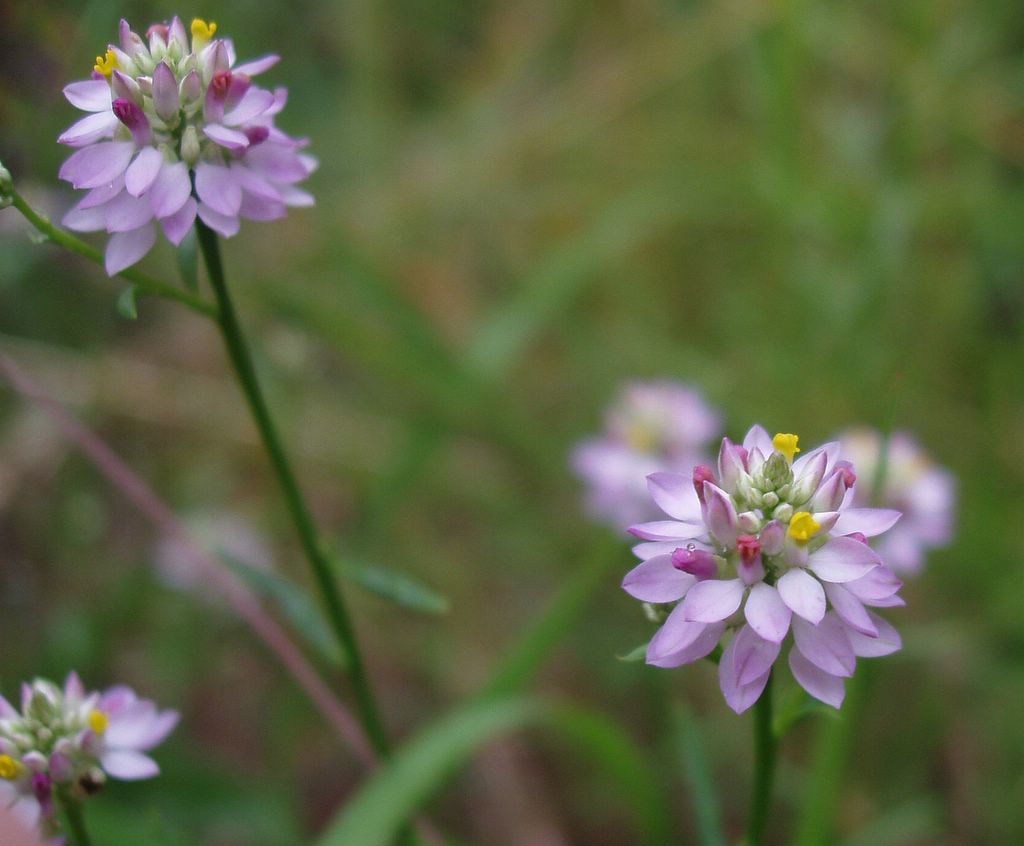
Polygala mariana -- I don't know a common name for this one, sorry.

*********
Note: An anonymous commentor suggested the common name for this is Maryland Milkwort. Thanks, Anonymous!

Swamp rose (Rosa palustris)

Beauty-berry flowers (Callicarpa americana)

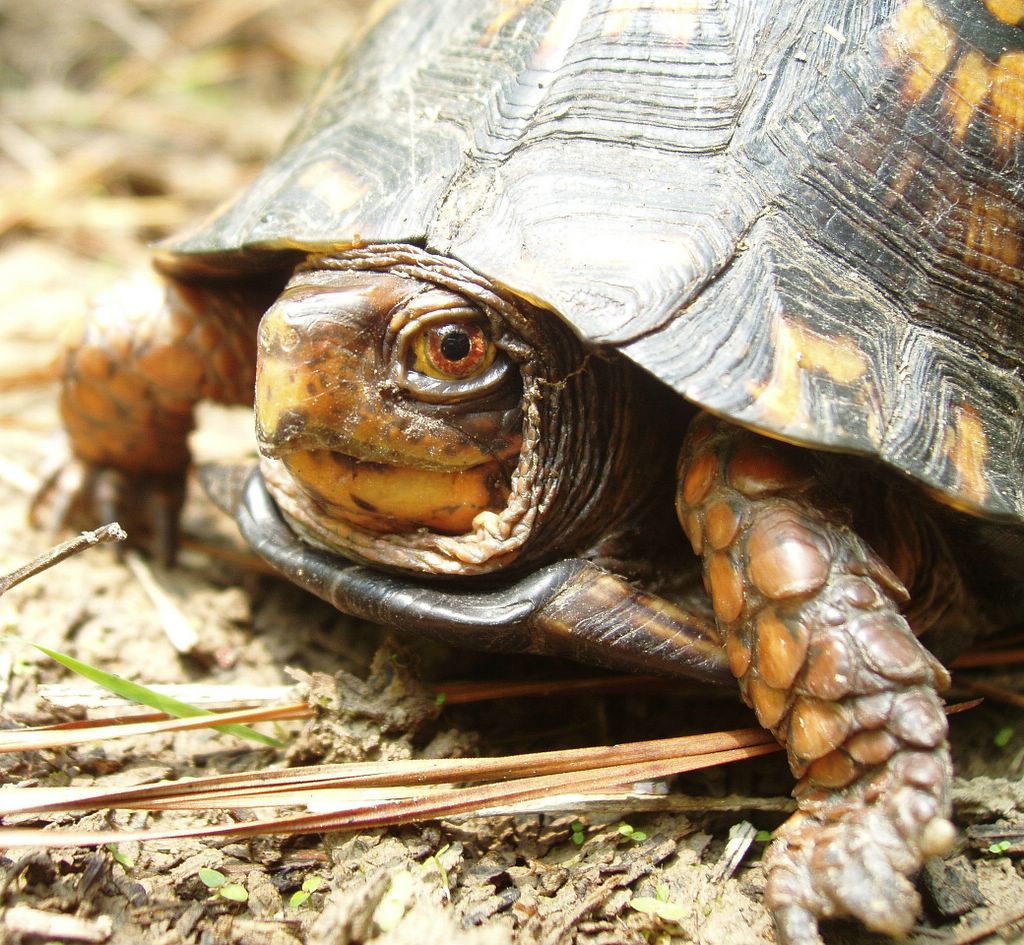
Eastern box turtle

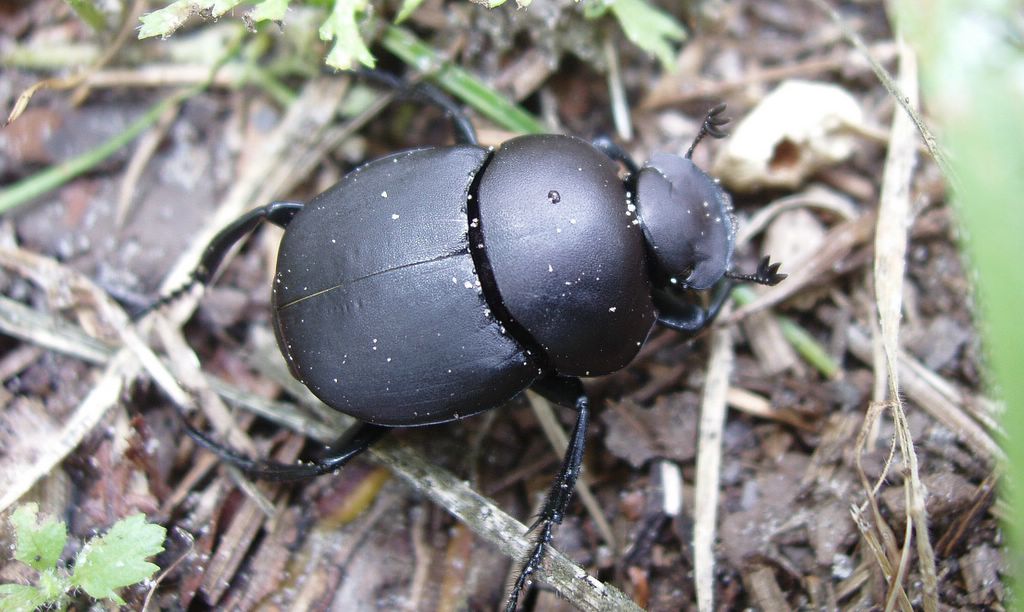
Dung beetle on the prowl

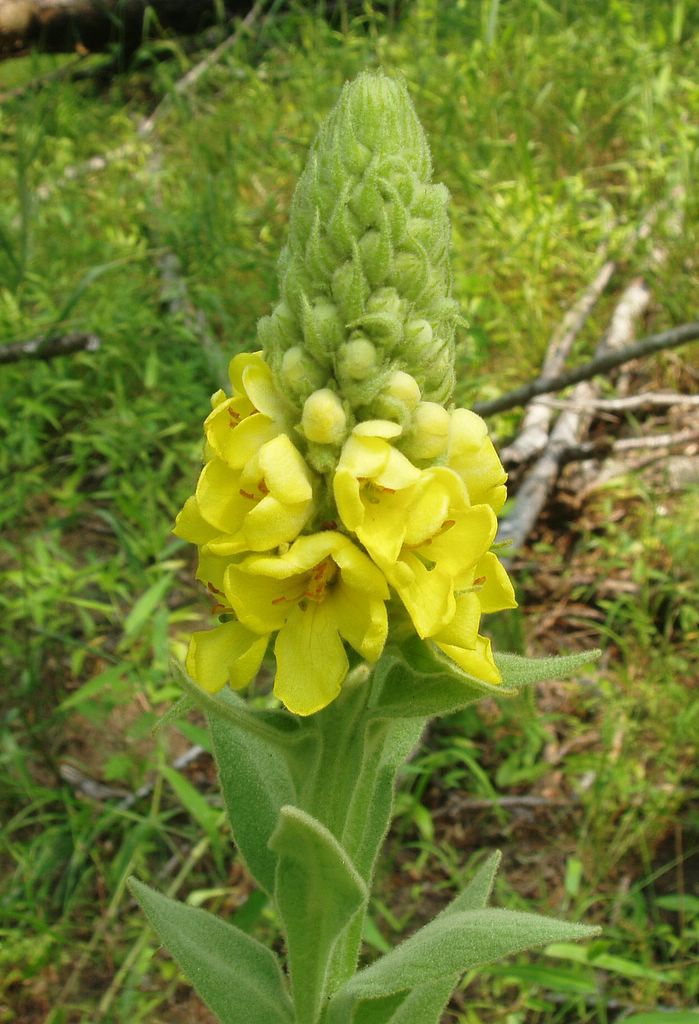
Woolly mullein in bloom

Ground beetle munching on a grub

Green treefrog

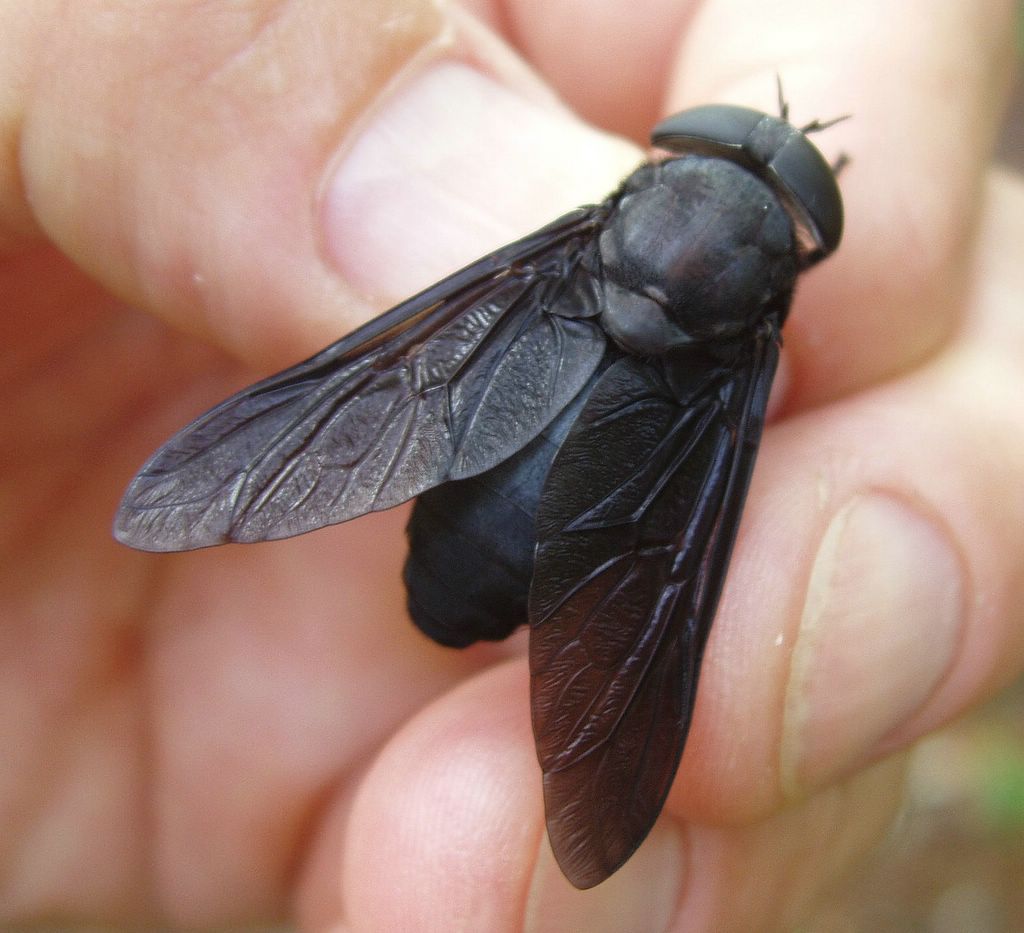
black horsefly

6.30.2005

On a Mission

Yesterday, four of us were sent on a fact-finding mission. Our destination was a small state park in Onslow County, about 3 hours to our south on the coast.

Despite the fact that it poured rain on us the whole way down, we had a good trip and gathered a lot of useful information.

It is always nice when work takes you to one of your favorite places :)


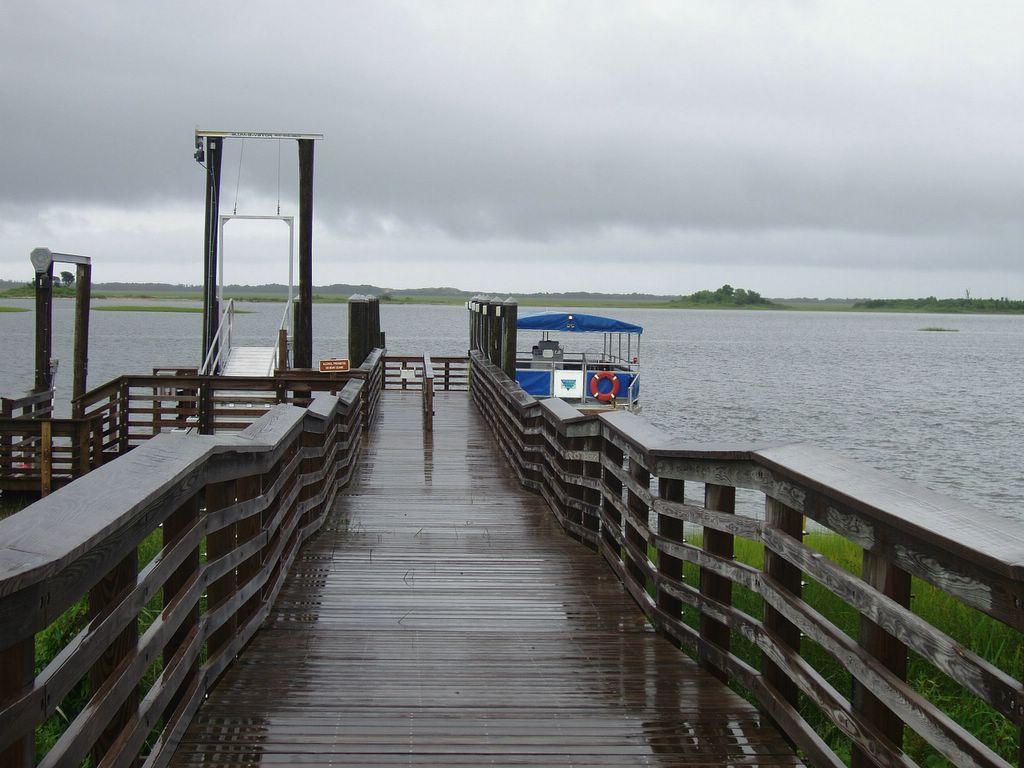
Ferry dock at Hammocks Beach

If you ever find yourself in the area, I highly recommend a trip to Hammocks Beach. For a nominal fee you can take a small ferry from the mainland out to an undeveloped barrier island. Yep, I said undeveloped -- a rare and wonderous thing these days. The trip over to Bear Island takes about 25 minutes. Once you reach the island, a 15 minute walk will take you to the ocean side. It always takes me well over 15 minutes because the ocean is never my main objective when I visit -- there is just too much to explore on the island!

You can also paddle a canoe or kayak out to the island -- but be sure you know which way the tide is flowing because it makes a big difference in the amount of time and effort you will spend getting to your destination (do you detect a hint of personal experience here?).

On the way back, near Edenton, we were treated to a break in the rain and a rainbow. I snapped a picture through the truck window. Doesn't do it justice of course, but it was the best I could manage.

6.27.2005

Delights of an Unkempt Lawn

Several years ago we started reducing the amount of lawn area we maintain at our house.

The idea of a monoculture of grass, cut to regulation length just doesn't hold much appeal for us -- partly because of all those years of having to cut grass two or more times a week when we were growing up and partly because we find lawns to be, well, sterile.

We like our weeds and the variety of insects and other beasties they attract. I realize a "jungle" yard isn't for everyone, but it suits us.

One of our favorite things about not cutting the grass is the little surprises we find in the natural sections of the yard...


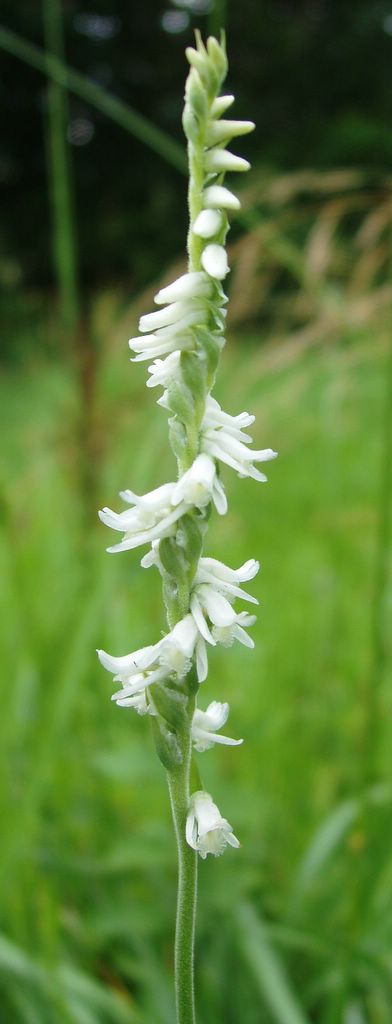
...like this little orchid, called Ladies'-tresses...


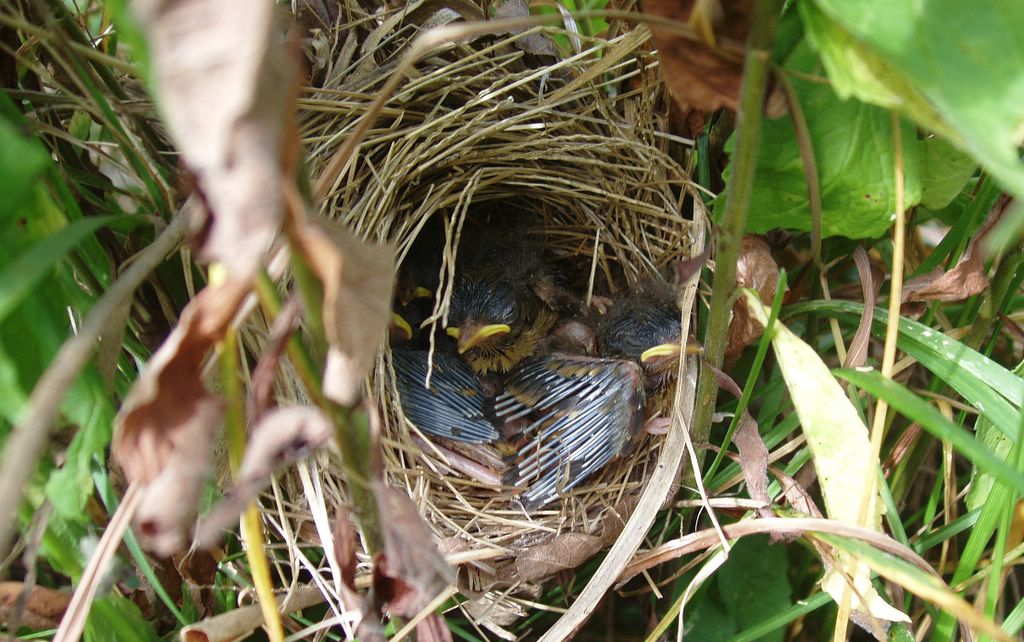
...and these Common Yellowthroat hatchlings in a nest just a few inches off the ground.

Time Flies


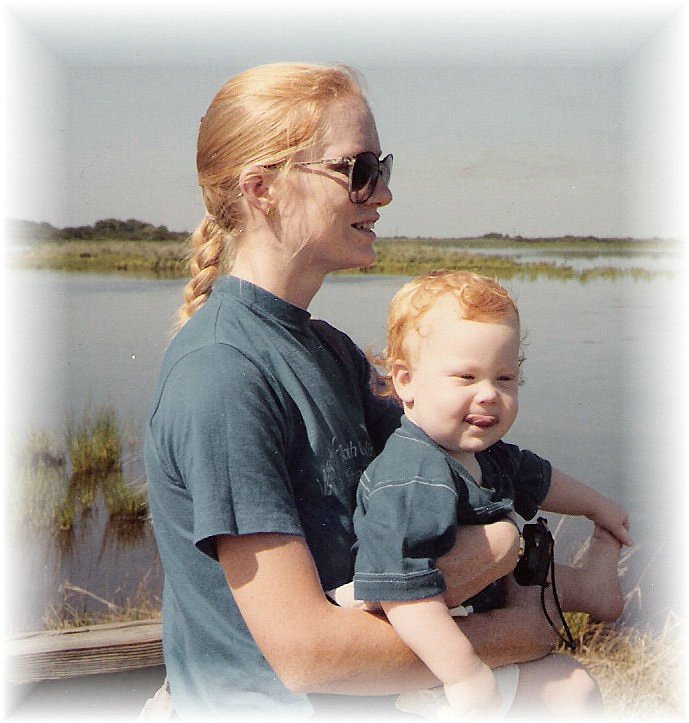
Twenty years ago...

...he was a chunky one year old with chubby cheeks and curls.

Yesterday he turned 21. Gone are the chubby cheeks, the curls, and the chunkiness. Now he is a lean, muscular man who, at 6' 3", makes me feel downright dainty :) He's grown into a fine man and we are very proud of him.

Happy Birthday, Flamebrain!! We love you.
(Oh, and to my older son - you can stop laughing now. Your birthday isn't too far off and I have just the picture.)
6.25.2005

Around the Yard

Bugs, bugs, and more bugs*! Lots of insect activity around the yard today.

*yes, I know it would be more proper to say Insects, insects, and more insects -- but I don't want to :P

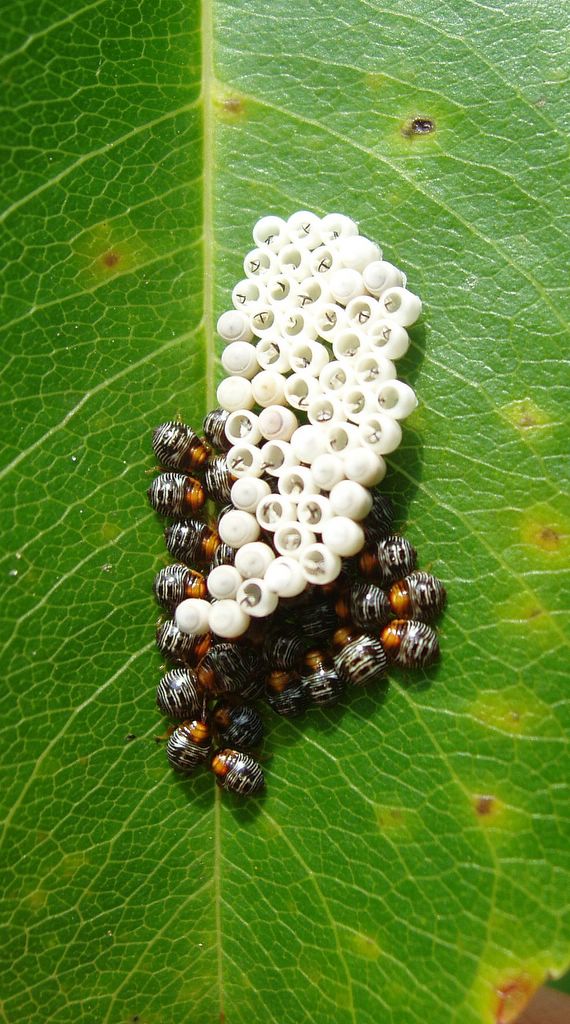
I'm not sure what these little hatchlings are and haven't had time to look them up yet. Whatever they are, they are on a leaf of a black cherry tree (Prunus serotina).


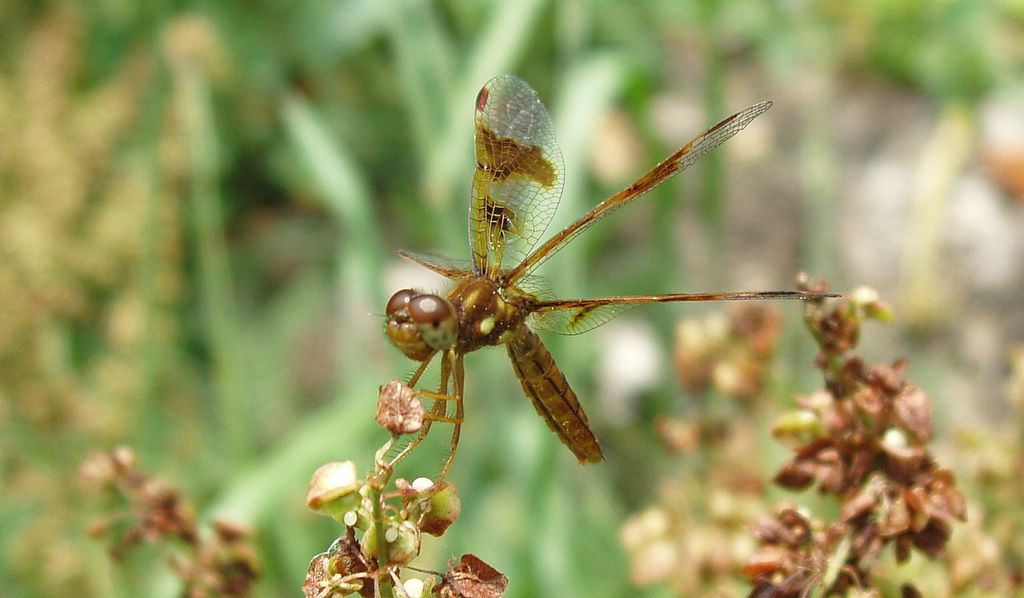
This female Eastern Amberwing (Perithemis tenera) was more cooperative than the male. He was too busy to have his picture taken.
These dragonflies are tiny -- less than an inch long -- and they have an interesting habit of sometimes mimicking wasps.


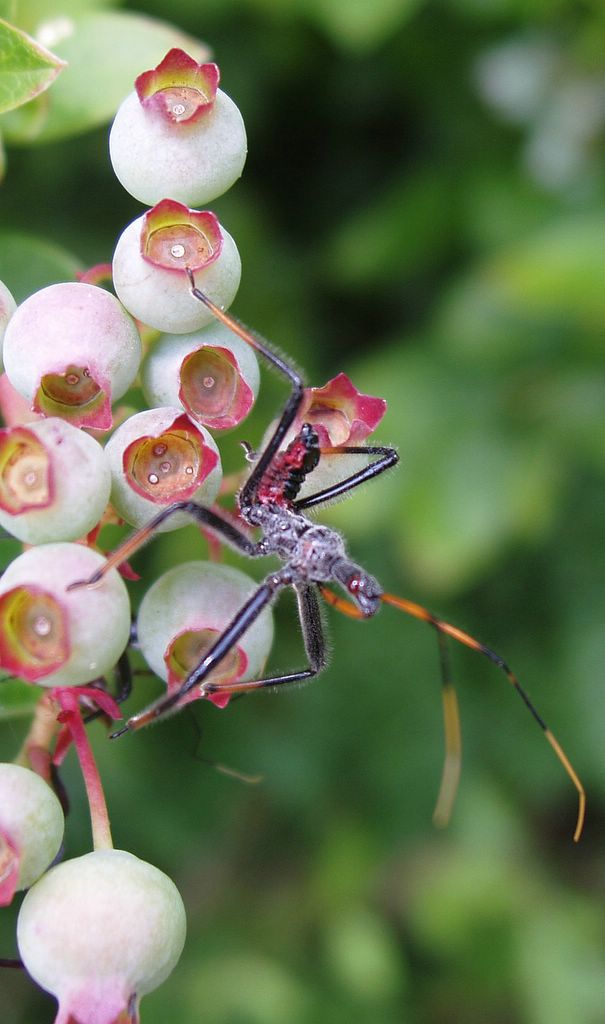
This true bug, lying in wait on a blueberry bush, may be one of the wheelbugs (a.k.a. "fire fannies") that hatched out in April. It still has a ways to go before it is fully mature.


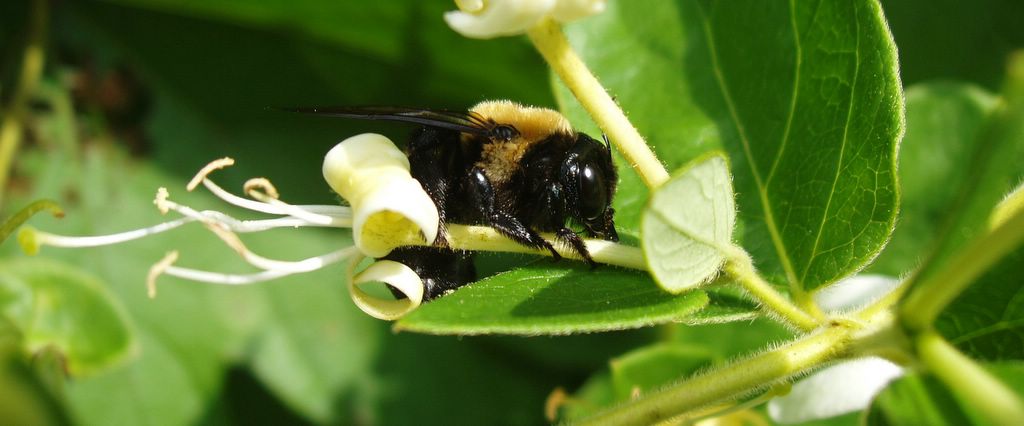
Cheater! This bumblebee is taking a shortcut to the nectar of this Japanese honeysuckle by cutting a hole at the base of the flower. Mr. Swamp took this picture -- after a year and a half he finally decided he would learn how to use our camera :)


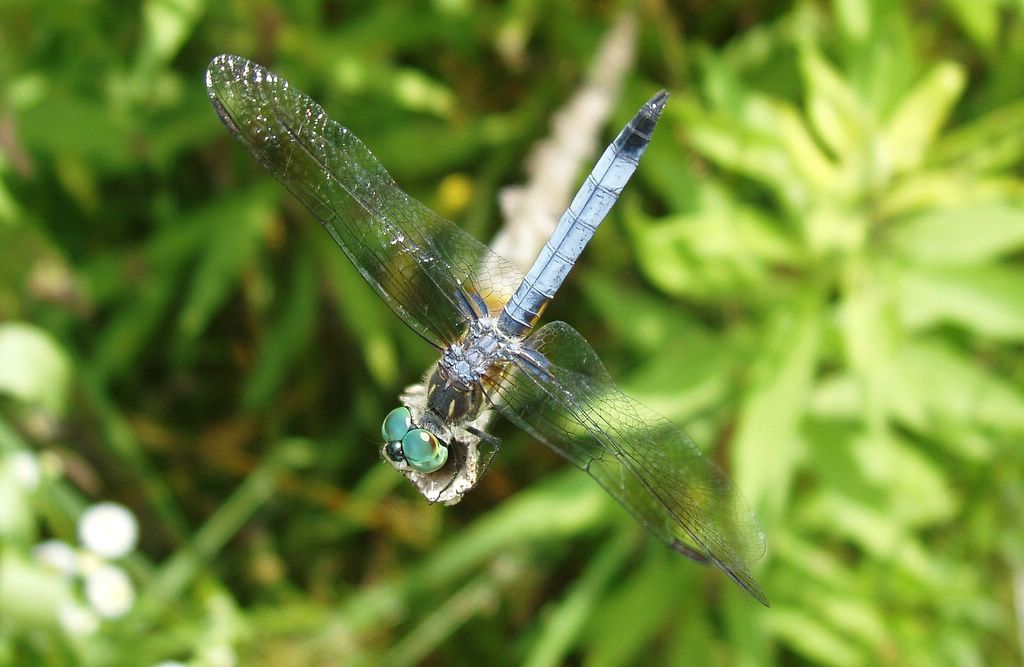
Another of the many species of dragonflies patrolling the yard, this is a male Blue Dasher (Pachydiplax longipennis).


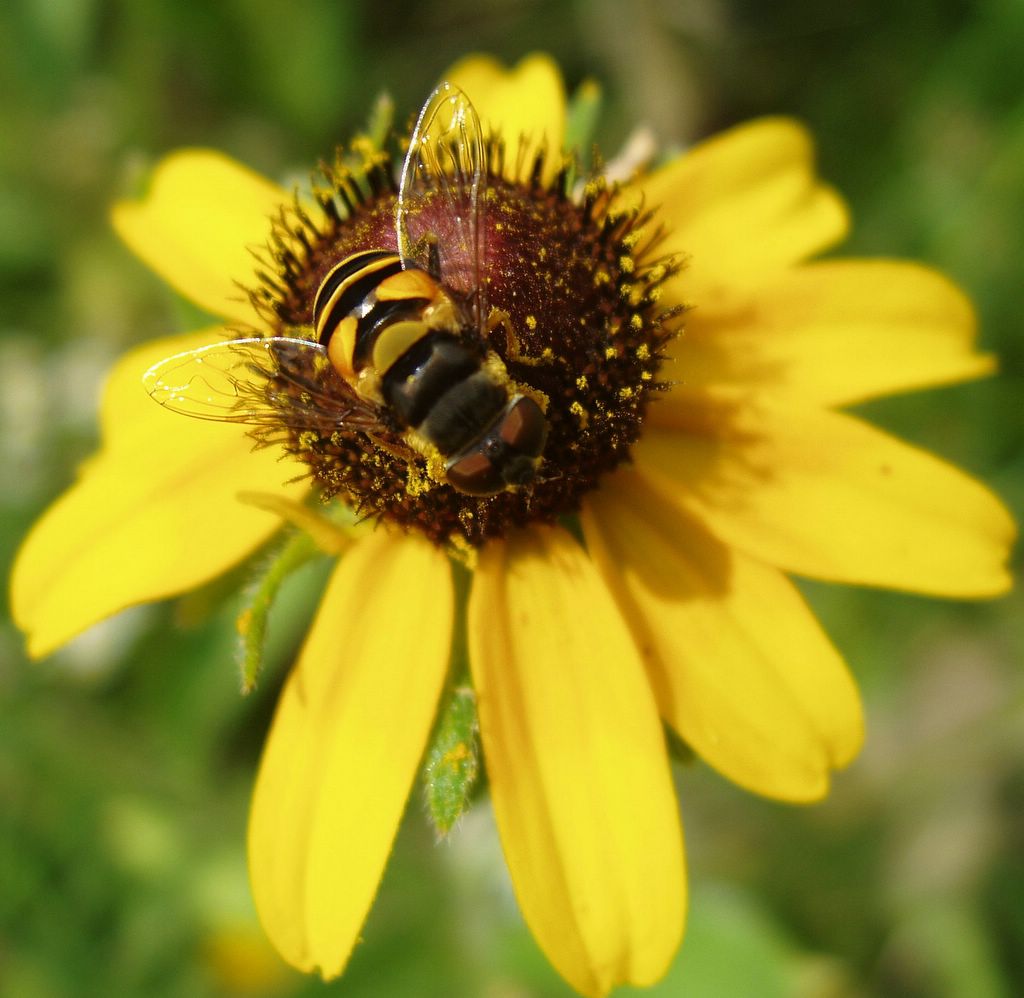
A flower fly (Eristalis transversa) on a cone flower. (Another by Mr. Swamp!)

6.23.2005

Garden Work

I woke up this morning with the intention of getting some gardening done in the cool early hours. My herb garden is in dire need of weeding and I figured I'd spend a couple of hours outside wrestling it into some sort of order before I settled in to get some work done on the computer.

After about 45 minutes of work I was beginning to see some results (I told you, dire need). It was nice out, the birds were singing and the yard was full of hummingbirds coming to the feeders. I found myself thinking, gee, maybe I will actually get everything done...

Alas, twas not to be. I had noticed a pair of Carolina wrens fussing at me from their perch in the apple tree. Didn't think much of it, wrens just seem to like to fuss. It wasn't until my husband stopped by with some moths he wanted me to photograph that we discovered why the wrens were so agitated.


My husband discovered Junior here in the tall grass near where I was weeding.


Wrens may be tiny, but they're fiesty little birds. At first we thought to move the baby out into the yard closer to the adult birds. Junior would have none of that! He scurried and scuttled and pecked at us when we tried to catch him.

So, in the end, I gave up my weeding and came into the house. Baby wrens grow fast and it won't hurt a thing if my garden stays weedy a couple more days :)

6.21.2005

A Quick Side Trip

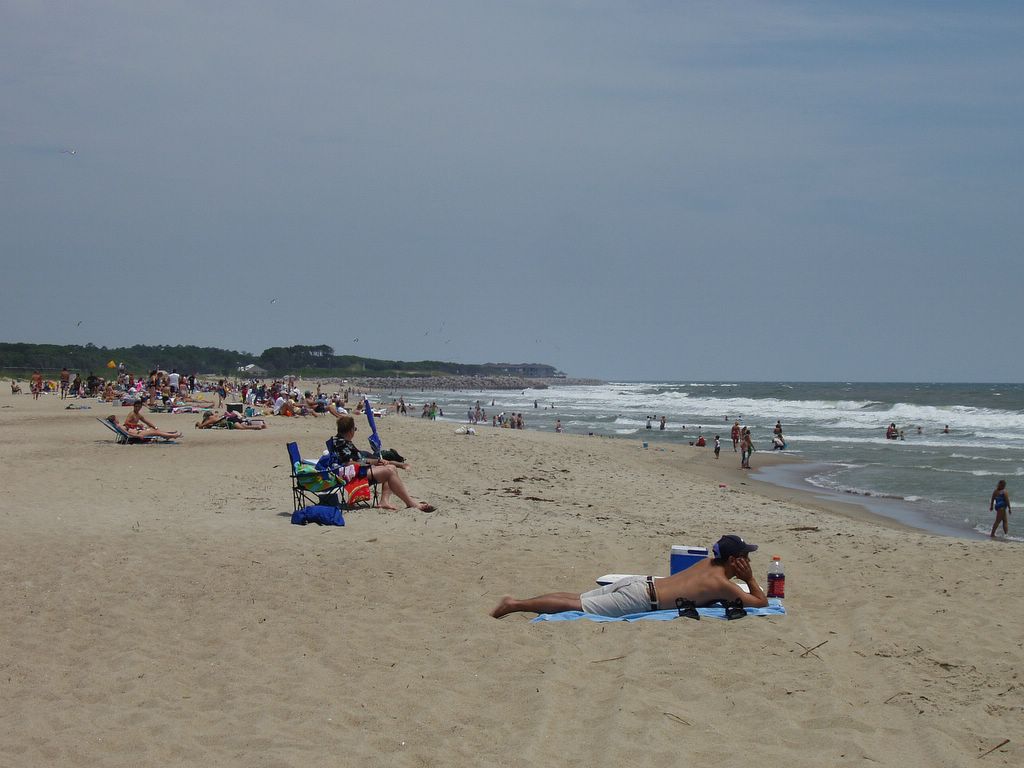
While we were in the neighborhood over the weekend we decided to visit Fort Fisher State Recreation Area. After dipping our toes in the Atlantic along with a zillion other people...


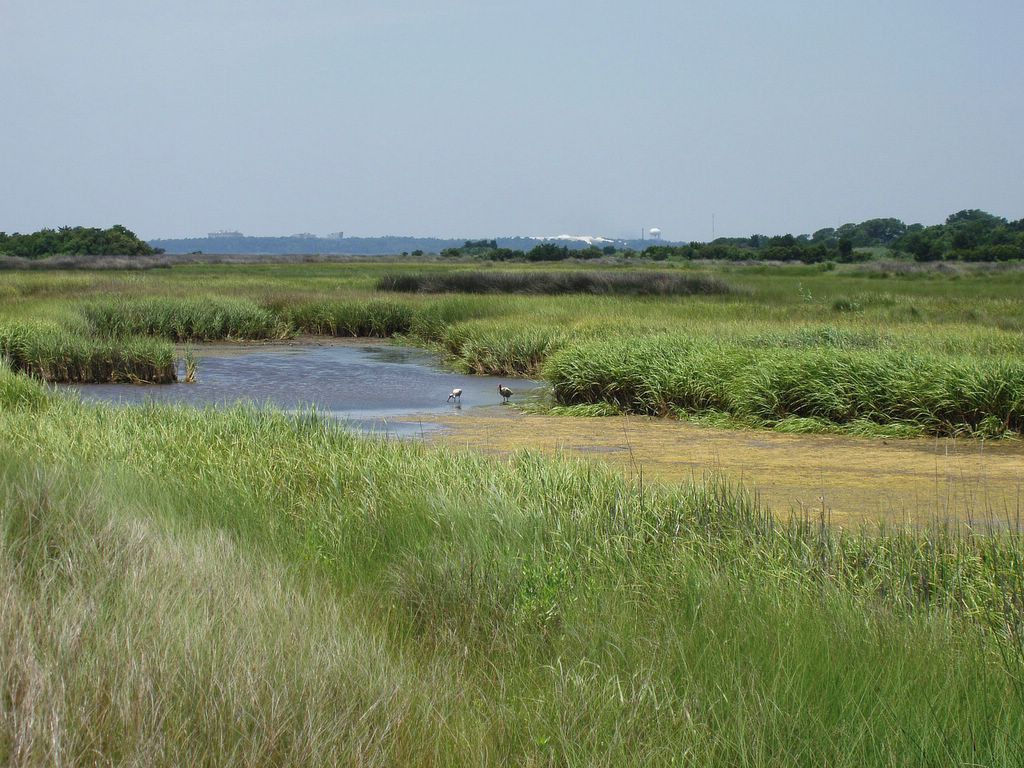
...we headed out on one of the trails through the salt marsh.


We saw Six-lined Racerunners, a type of lizard that didn't have time to stop for a picture; a very camera-shy black racer (you knew I would find a snake!); numerous shore bird species, including these oh, so dirty white ibis...yep, right there, those little bitty blobs in the center of the picture - trust me, they're ibis...


...and when we peered over the edge of the boardwalk we were treated to the sight of innumerable fiddler crabs, scurrying about on very important fiddler crab business.


There were also flowers, dragonflies, song birds, grasshoppers...well, you get the idea. All in all a very enjoyable little side trip.